Moleculent is pioneering functional profiling, bringing cell-cell communication within reach of direct study.

See cells talk
Knowing which cells are present is one thing. Understanding how they interact is another. Moleculent’s functional profiling technology, the Glimt platform, detects receptor–ligand interactions in intact tissue, connecting molecular engagement to the identity and spatial organization of the cells. This opens new ways to explore how cells communicate.
Why function matters
Cell-cell communication coordinates the processes that maintain tissue health and respond to disease. In cancer immunotherapy, patients with similar PD-L1 expression can respond differently to checkpoint therapy, because expression alone cannot establish whether PD-1 and PD-L1 are interacting in the tissue. Measuring their engagement adds a functional perspective to the study of immune responses. PD-1::PD-L1 is one of many interactions worth investigating. Moleculent’s ambition is to extend functional profiling across every major human organ and biological pathway.
Explore how functional profiling captures cell-cell communication within its cellular and spatial context.


The Glimt platform
The Glimt platform brings functional profiling together in one system. Combining a ready-to-use panel, an instrument with an automated workflow, and intuitive data exploration, the platform is designed for ease of use, accuracy, and high reproducibility, with capacity to profile tens to hundreds of molecular interactions and cell markers.
Instrument
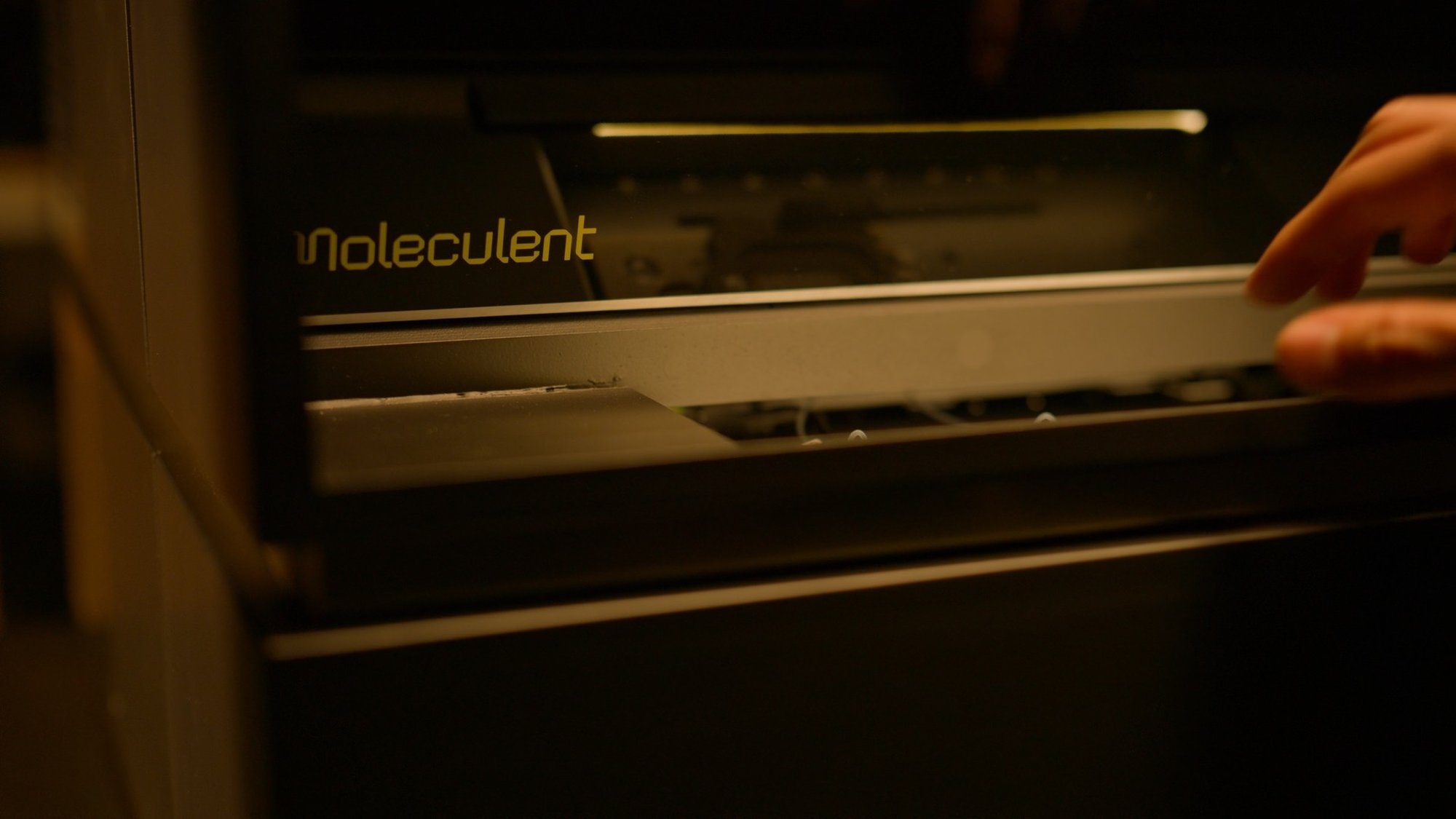
Performs the on-slide workflow in intact tissue, detecting receptor–ligand interactions while retaining cellular and spatial context. Dedicated support from Moleculent provides expertise throughout the process.
Panel
Glimt panels combine receptor–ligand pairs with cell identity markers, enabling study of molecular interactions across cell populations. New panels are in development to expand into additional disease areas, including neurodegenerative diseases.
Data
Our intuitive data type interface allows researchers to examine molecular engagement in relation to cell identity and tissue organization, making interaction data accessible for biological interpretation.